
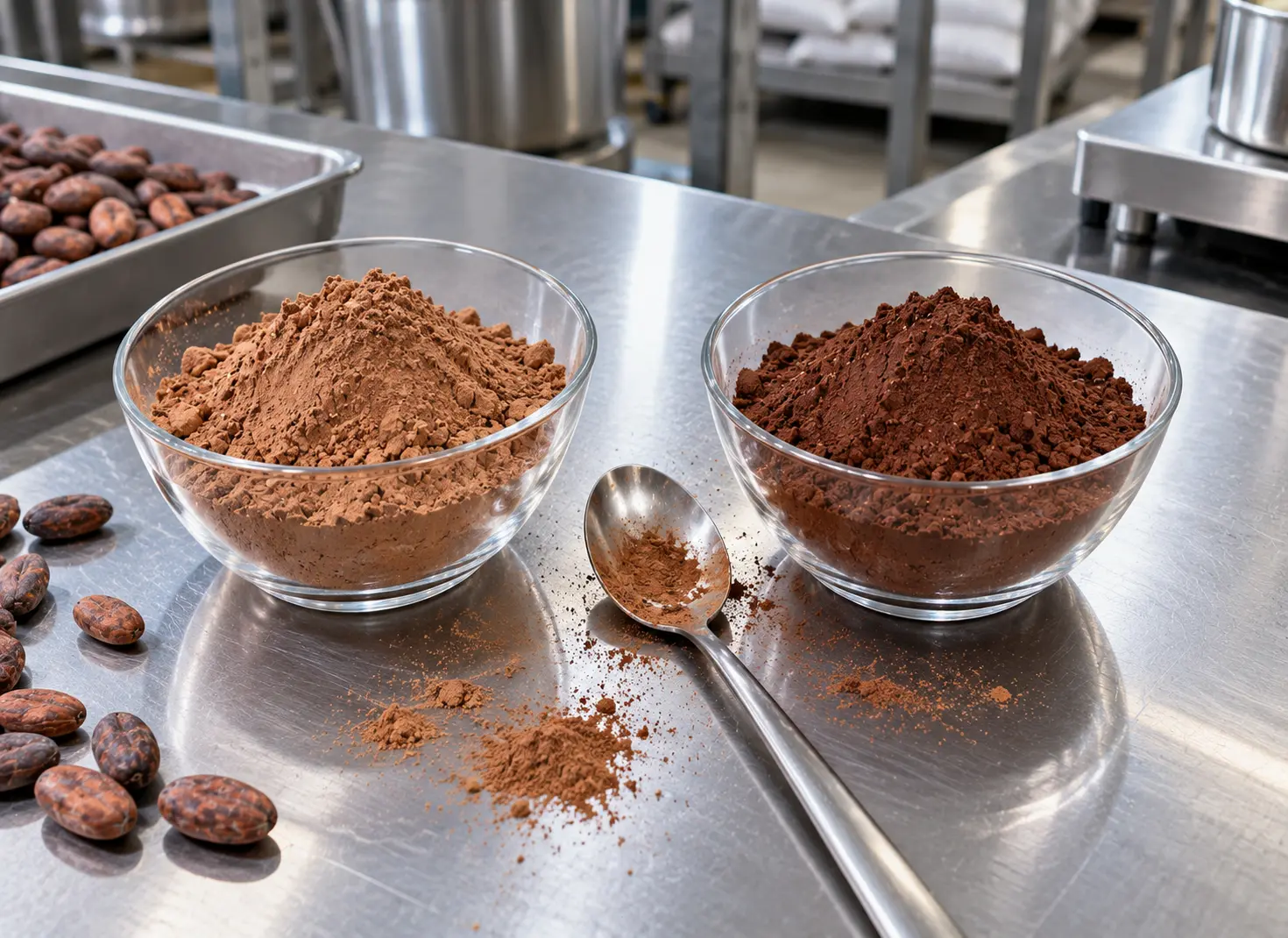
If your plant makes chocolate, bakery, or beverage products for export, choosing the right powder grade is not only a flavor preference. The grade affects color, acidity, and how the ingredient behaves inside your formula.
Many buyers still treat every unsweetened cocoa powder as the same ingredient. In production, natural and alkalized grades behave differently, so the wrong choice can shift batch color, mouthfeel, or baking reaction.
This guide helps R&D and procurement compare options clearly, then match the grade to your application before you lock a purchase order.
What Makes Natural Cocoa Powder Different
Natural cocoa powder is non alkalized. It usually looks light brown, tastes more acidic, and keeps a sharper cocoa character. That acidity can matter when your recipe relies on baking soda.
In export manufacturing, natural cocoa powder is often chosen when you want a brighter cocoa note or a classic reaction in certain bakery systems. It is also a common baseline when teams compare grades side by side in the lab.
You can review Aneka Kakao’s light brown option on the natural cocoa powder grade page before you compare it with alkalized lots from the same supplier.
When Alkalized Cocoa Powder Fits Better
Alkalized cocoa powder (often called Dutch process) is treated to reduce acidity. Flavor tends to be smoother, and color can move from brown toward deeper shades depending on the alkalization level.
Teams pick alkalized cocoa when drinks, dairy, or darker bakery products need a softer taste and a deeper visual tone. Light grades are versatile, while medium grades push color further without jumping straight to black.
If you are adjusting color step by step, start with the light alkalized product page, then compare the medium reddish brown grade and the medium dark brown grade. Keep black grades for products that truly need a near black finish.
How Unsweetened Cocoa Powder Specs Affect the Decision
Whether you buy a natural or alkalized lot, unsweetened cocoa powder should arrive with clear technical data. Ask for pH, fat content, fineness, moisture, and a COA that matches the sample you approved.
Export buyers often lose time when marketing wants a darker look while purchasing only compares unit price. Align the visual target first, then shortlist grades that can hit that target without forcing excess dosage.
If your current formula already works with alkalized cocoa, do not switch to a natural grade without a trial. Acidity and color can move more than the spreadsheet suggests.
Natural Cocoa Powder vs Alkalized Options in Production Checks
Before you switch lots, align R&D, QA, and purchasing on a short checklist. Write down target color, flavor, and process constraints so every quote is compared on the same basis.
- Confirm whether the formula needs natural cocoa powder acidity or a smoother alkalized profile
- Define the finished color target before comparing alkalized cocoa powder samples
- Ask for pH, fat, fineness, moisture, and COA for each unsweetened cocoa powder lot
- Run a small trial before scaling, especially when replacing an existing grade
This process keeps grade decisions tied to application data, not only landed cost. It also makes it easier to explain a change to plant operators and auditors.
Quick Grade Map for Export Buyers
A practical map: start with natural cocoa powder when acidity and baking soda reaction matter. Move to light or medium alkalized cocoa when you need smoother flavor and deeper color. Reserve heavy black grades for products that demand a very dark finish.
Aneka Kakao manufactures multiple powder grades for industrial and export buyers from East Java, Indonesia. If your team is still choosing between a natural grade and alkalized cocoa powder, share the target application and color on the Aneka Kakao contact page so the right option can be discussed with clear specs.
Next Step Before You Order
Lock the grade logic first, then talk price and lead time. When natural cocoa powder, alkalized cocoa, and unsweetened cocoa powder options are compared with the same checklist, export teams waste fewer trials and avoid late formula changes.
Use one approved sample as the reference lot. Ask the supplier to confirm that future deliveries stay within agreed limits.
Aneka Kakao
Email: info@anekakakao.com
Telepon / WA: +62 31 8079 977
Alamat: Jl. Raya Pilang KM. 5 Dusun Rame No. 8 RT 024, RW 012 Pilang, Wonoayu, Sidoarjo, East Java, Indonesia
Web: https://www.anekakakao.com/